One of the highlights of my first trip to Australia was my visit to the beautiful Tilligerry Habitat — a nine-hectare crown reserve in Tanilba Bay, set along the foreshore of Port Stephens. This special place protects koala and wildlife habitat and also features a native plant nursery.
While we didn’t spot any koalas during our visit, I was lucky enough to capture some lovely close-up shots of a native kookaburra. The reserve is a blend of scenic forest, scrub, wetland, and coastal environments, all connected by an easy network of paths and boardwalks. The two-kilometre walk on flat gravel trails made it simple to explore while feeling completely immersed in Australia’s natural countryside. It’s a walk — and a place — I won’t forget anytime soon.
Fingal Beach feels like one of those places you stumble into and wonder why you didn’t know about it sooner. The beach itself is huge, open, and clean — the kind of sand you can walk on for ages without running into crowds.
The surf rolls in steady, but it’s not the kind of chaos you get at Bondi. If you just want to float, there are calmer patches closer to the headland. The vibe is slow and easy. There’s not much “scene” here — no flashy esplanade or strip of bars. Just a general store, a café or two, and the sound of waves carrying through the streets. It’s mostly locals and families on holidays, with kids on bikes and dogs running free. The standout is Fingal Spit. On the right day, when the sandbar is fully exposed, it looks surreal — a thin white bridge across the sea.
You’ll see people wandering over toward Shark Island, but it’s a place to respect more than conquer; the currents can flip in an instant. What sticks with you is the feeling. It’s one of those spots where time stretches out — perfect if you need a break from noise, traffic, or too many decisions. We got to it late afternoon, just before sunset, it was so relaxing.
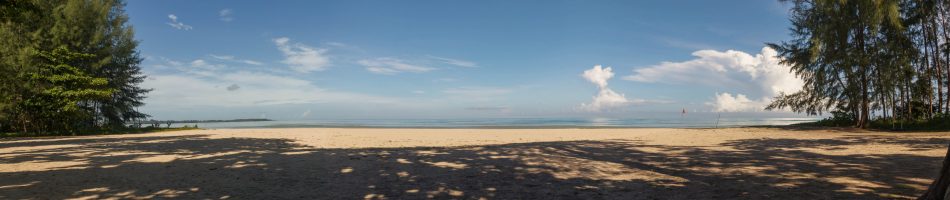
Pakarang Beach, tucked along Khao Lak’s coastline in Phang Nga, Thailand, is a serene spot that hasn’t yet been overrun by crowds. Its wide stretch of soft sand and shallow, clear water make it perfect for a quiet day by the sea.
The beach is lined with casuarina and palm trees, giving plenty of shade and a laid-back vibe. Unlike more developed beaches, Pakarang feels almost untouched. It’s great for long walks, collecting shells, or just sitting to watch the sunset. The nearby coral reef (pakarang means “coral” in Thai) adds a splash of natural beauty, especially at low tide when coral fragments dot the shore.
If you’re looking for a peaceful, beautiful place where you can hear the ocean and escape the rush, Pakarang Beach is one of Khao Lak’s hidden gems.
Hat Yong Ling feels like a secret you’re glad you found. It’s not flashy or packed with beach bars—it’s quiet, curved like a crescent moon, with soft sand and that line of casuarina trees whispering in the wind. You walk out, and the sea is warm, calm, and inviting.
You don’t need much here—just a towel, maybe a book, and time to let go. On weekends, you’ll see Thai families setting up picnics under the trees, kids chasing crabs in the tidal pools, laughter echoing over the sand. It still feels local, untouched. And when the sun gets too strong, the pine forest behind the beach pulls you in.
The shade is cool, and if you follow the trails, it’s just you, the trees, and the soft crunch of needles under your feet. Hat Yong Ling isn’t just a beach—it’s a pause button. A place that reminds you how good simplicity can feel.
Finding Tranquility at Koh Bae Na Beach Tucked away in Thailand’s Trang region, Koh Bae Na Beach feels like one of those places you stumble across by accident and never forget.
Located in the Andaman Sea (part of the Indian Ocean), it ranks 21st out of 53 beaches in Trang, but honestly, numbers don’t do it justice. It’s about 34 km from Trang city, with the nearest settlement, Hat Chang Lan, just 2.8 km away.
What makes Koh Bae Na special is how untouched it is. No resorts. No beach bars. Just nature at its best. The setting is a beautiful mix of rugged cliffs, mountain slopes, thick greenery, and that perfect turquoise water. The sandy beach runs for about 800 meters, with a gentle slope into the sea—no sharp rocks, no need for aqua shoes. Just soft sand under your feet.
When I visited back in 2023, the nature walk circling the small islet wasn’t finished yet (word is, it’s complete now). We had the whole beach to ourselves for hours, aside from a small family of beach dogs—mum, dad, and two playful pups—all very relaxed and friendly.
What stood out most for me was the calm. It was one of the most peaceful places I’ve ever been. With the tide out, I could stroll across the pontoon path without feeling like I was about to fall in every few steps. The views were stunning, with crystal-clear water on one side and thick jungle on the other. There’s also a wooden staircase leading up to a viewpoint on one side of the islet. I didn’t climb to the very top, but I could already tell the view was going to be spectacular. If you love nature, solitude, and quiet adventures, this place will hit the spot.
Whether you’re into kayaking, paddleboarding, or just sitting and soaking up the scenery, Koh Bae Na is a gem worth exploring. Enjoy the journey—I know I did.
Tucked behind busy streets and modern buildings, Gyeonghuigung Palace is one of Seoul’s quietest treasures—and that’s exactly what makes it unforgettable.
Unlike Gyeongbokgung or Changdeokgung, where crowds and cameras are constant, Gyeonghuigung gives you room to breathe.
When I visited, maybe a few people were scattered across the grounds. No tour groups. No rush. Just wide-open courtyards, soft footsteps, and the feeling that you’ve stepped back in time. It ended up being my favorite palace of the whole trip.
I could’ve stayed all day—soaking in the stillness, chasing light across the stone walkways, and enjoying that rare kind of peace you almost never find in a city this alive. Gyeonghuigung isn’t the biggest, flashiest, or most famous palace in Seoul—and that’s the whole point. It’s a quiet pocket of beauty in the middle of the fast lane. And sometimes, that’s exactly what you need.
The Busan Sky Capsule is a charming elevated monorail that glides along the coast at Haeundae Blueline Park, running between Mipo Station and Cheongsapo Station.
We boarded at Cheongsapo Station, and while waiting, wandered down to photograph the lighthouses—totally worth it. It was a slightly late birthday present, but exactly what I wanted. The ride was fabulous, with sweeping views over the bay that made it feel special from start to finish.
Another Sky walk, this time the Daritdol, which is not far from the Haewol skywalk, well not by clacker train anyway.
Cheongsapo Daritdol Skywalk opened in August 2017 is located at one end of the beautiful Cheongsapo fishing village in Busan. The 72.5m long and 20m high observatory in the shape of a blue dragon stretches out impressively over the ocean. You are able to see the ocean under your feet from the transparent glass floor for the thrilling experience of walking on the sea. From the observatory, you can enjoy panoramic view of the Songjeong and Cheongsapo coastlines, particularly beautiful during sunset.
Haewol Skywalk- Haeundae-Busan South Korea April 2025
Perched above the waves in Busan’s iconic Haeundae District, the Haewol Skywalk is a glass-bottom walkway that lets you stroll above the sea with uninterrupted views of the coastline. Built with thick, transparent panels, the walkway gives the illusion of walking on water—perfect if your craving a little thrill without full-on adrenaline. Below, waves crash against the rocks. Ahead, you get panoramic views of Dongbaekseom Island, the Haeundae skyline, and the endless blue of the East Sea.
The name “Haewol” means sea and moon, hinting at the walkway’s appeal at dusk. At sunset or under moonlight, the skywalk becomes a serene, almost surreal spot—ideal for photos or quiet reflection.
Another look at Busan from my recent visit in April 2025, I will be creating a video on the sky capsules as well so be sure to look out for it!
Cheongsapo: Busan’s Chill Coastal Hideaway Busan is famous for its big-name beaches—Haeundae, Gwangalli, Songdo—but if you head just a bit off the beaten path, you’ll find a coastal village that feels like a deep breath of fresh air. Welcome to Cheongsapo (청사포)—a quiet fishing town where life slows down and the ocean does all the talking.
What’s So Special About Cheongsapo? Cheongsapo is where old-school Korea meets seaside serenity. It’s not flashy. There’s no music blaring from speakers. Instead, you’ll hear waves crashing, grills sizzling, and seabirds calling above the docks.
🌅 The Twin Lighthouses At the edge of the breakwater, you’ll find two lighthouses—one red, one white. They’ve become unofficial landmarks of the village and a favorite photo spot. Come at sunset, and you’ll see the sky light up behind them in dramatic pinks and golds. No filter needed.
One of the “off the beaten track” places I went to on my recent trip to Busan in South Korea. Thank goodness most of the books were in Korean, as you might have lost me for days in there!
Bosudong Book Street: Busan’s Best-Kept Literary Secret In a city known for its beaches, seafood, and neon-lit nightlife, it’s easy to miss the quiet corners. But tucked into the heart of Busan’s Jung-gu district lies a street that feels like it belongs in another time—Bosudong Book Street.
Where History Meets Paperbacks Bosudong Book Street (보수동 책방골목) started during the Korean War. As refugees fled to Busan, displaced booksellers set up shop here, selling everything from used textbooks to foreign language novels. Over decades, those makeshift stalls grew into permanent stores—and today, the alley remains one of Korea’s last bastions of secondhand book culture.
Walk down the narrow path, and you’ll find bookshelves spilling out onto the sidewalk. Old signs creak in the breeze. Dusty stacks rise like mini skyscrapers inside the tiny shops. Every store has its own rhythm, and every book looks like it’s got a story behind it.
What You’ll Find Secondhand Gold Mines: From out-of-print Korean literature to tattered English paperbacks, Japanese manga, vintage cookbooks, and even old-school exam prep materials—there’s something for everyone.
Retro Ambiance: Think cracked wooden floors, hand-written labels, and shelves that look like they haven’t moved in decades. If you’re into analog vibes, this place is heaven.
Art in the Alley: Murals and colorful signage have sprouted along the walls in recent years, giving the street a touch of modern character without losing its old soul.
Another look at Busan from my recent visit in April 2025, I will be creating a video on the sky capsules as well so be sure to look out for it!
Cheongsapo: Busan’s Chill Coastal Hideaway Busan is famous for its big-name beaches—Haeundae, Gwangalli, Songdo—but if you head just a bit off the beaten path, you’ll find a coastal village that feels like a deep breath of fresh air. Welcome to Cheongsapo (청사포)—a quiet fishing town where life slows down and the ocean does all the talking.
What’s So Special About Cheongsapo? Cheongsapo is where old-school Korea meets seaside serenity. It’s not flashy. There’s no music blaring from speakers. Instead, you’ll hear waves crashing, grills sizzling, and seabirds calling above the docks.
🌅 The Twin Lighthouses At the edge of the breakwater, you’ll find two lighthouses—one red, one white. They’ve become unofficial landmarks of the village and a favorite photo spot. Come at sunset, and you’ll see the sky light up behind them in dramatic pinks and golds. No filter needed.


 Journeys From A Small Room