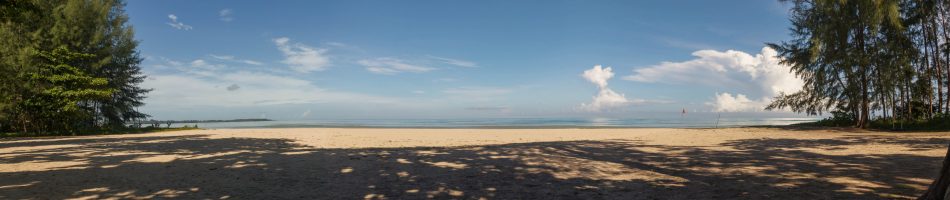
It is known that tin was discovered a couple of millennia ago in the Kathu district of Phuket and was mined until 1992 when the last mine on Phuket closed. Cassiterite (the principal ore of tin) was found in abundance in Phuket and the neighbouring Andaman coast (noteably from KhaoLak to TakuaPa).
In the Ministry of Primary Industries(which mining was) and Mines the campus which houses the current offices, has in it’s grounds these old machines which were used during the mining in the 20th Century.
Fascinatingly even steam engines sit aside the giant wheels and cogs of these machines, their belts and pulleys long gone!
But it has been tastefully done and was a joy to see on my photographic journey around Phuket.
There is so much info on Affandi on the Internet that I have decided to let the images speak for themselves, after all he was an Artist!
Suffice to say that I got a great enjoyment from visiting his Galleries and home by the river in Yogya. A beautiful calm place where i understood his desire to create.
I have also included the galleries that house his daughters work, Kartika, and the Gajah Wong studio where work in alluding to his style by modern artists is for sale.
If you ever have a chance to visit , i would say it is a “must do” place. Even sitting in the cafe below his dwelling and sipping a cool drink taking in the city around you is a great experience.
I have tried throughout this slideshow to identify each painting, where i have been unable i have left them blank. The Gajah Wong studio did not have identifiers like the museum part.
During my visit to Jogjakarta, close to the Royal Palace within the area known as the Kraton (a grand complex that was meticulously planned to reflect the Javanese cosmos.). I visited the Royal Carriage museum.
There are a variety of the carriages. In Museum Kereta Keraton Yogyakarta, around 23 carriages.
The rooms of the museum which are actually quite huge, become a little bit narrow because of the big royal carriages.
Every single carriage in the museum has a name and on the wall next to it, a picture that shows the time when the carriage in use.
Not only that, the costumes which were used by the coachmen of Keraton also have been neatly organized in big old cupboards. Not far from those cupboards, there’s also a horse sculpture which is fully-equipped with carriage-pulling equipment. so you get a really good idea of how it would have looked during ceremonial times/use.
In the center of the building, are two large rooms, which houses at least eight other carriages , all placed differently because of their greater size.
Among them, there is Garuda Yeksa Kareta which is decorated with 18 carats of gold and was made by the Dutch in 1861. This carriage which is usually pulled by 8 white horses, has been used since Sri Sultan HB VI’s inauguration up until now.
Then, there is also Kyai Roto Praloyo Kareta which is a carriage that used to carry Keraton’s noble remains to the funeral.
A really stunning collection of Royal vehicles, that was lovely to see up close.
One of my peaceful moments short videos that I have finally had time to get to making.
Interestingly this was photographed this last Sunday after an unexpected visit to Rawai Beach . I spent quite a bit of time there on Sunday afternoon, and took , as I do, images to remind myself to remember a calm and enjoyable moment of life. enhanced even more by the tide going out leaving the local fishing boats stranded in the sand.
Watching people picking their way through the rocks to find small crabs and shellfish. So for anyone who might feel like a breath of fresh air, have a watch, and lose yourself somewhere beautiful in your mind!
for this slideshow/video I used the two software options above. First in Lr5.7 where I sort and prepare the images for selection and conversion to jpg for the slideshow and its subject. I try to use images that reflect my actual journey at a location, to try and give the viewer a “walk with me” feel.
Once the images are exported to JPG in a “holding folder on my desktop, I then open PSE12 and select the “create” tab on the top right and select “slideshow”. This particular version of PSE actually allows me to set the frames and the transitions and the time on each slide should I wish, along with adding music (from YouTube music library, so I don’t break any licencing issues). I have quite a methodical way on the process now, but it has taken time getting there.
I first scroll one at a time through the images in the slideshow, once I have discarded “duplicates” or initial “I ‘m not sures”, then proceed to the add the “Pan and zoom option. This I think gives the images “live movement”. Then Titles are added along with the final piece of music, where I check it through again one more time before outputting it in one of the many options PSE 12 gives me.
This final product is then uploaded to YouTube, not to make money but as a compatible way of letting the viewer access from differing platforms.
In fact my main aim to “exhibit” my photography in this way as I actually live abroad at the moment, and the foreseeable future. Local galleries tend to help their own.
My inspiration for using this media as a method of exhibit, well I have to thank Viviane Sassen and John Gerrard at the Photographers Gallery in London. Both exhibited using giant projector screens with their image/slideshow playing through. I loved it!
So although I haven’t put exif data with every single image, I hope you see what I am trying to achieve….I welcome
A recent trip to Indonesia, took me to a few places of interest, one of the coolest was here…
Tamansari Water Castle: A Place for Princesses to Bathe and be ‘Hunted’ by the Sultan
The Sultan loves to go hunting during his free time and The Umbul Pasiraman was designed to appease the Sultan of that desire. Different from the Panggung Krapyak which was designed to hunt deer, the Umbul Pasiraman (which means a place to take a bath) was designed for the Princesses to take a bath and for the Sultan to relax and ‘hunt’ for a wife.
To catch his ‘two-legged prey’, it is said that the Sultan would throw a rose from the high tower on the south of the pool and the Princess who caught that rose will be his ‘wife’.
Usually, the ones who would catch the rose would either be the Queen or his concubines.
There are three different pools at Umbul Pasiraman namely Umbul Binangun, Umbul Muncar and Blumbang Kuras each a different area for the daughters of Sultan and his potential wives to bathe.
Other than the Umbul Pasiraman, visitors can also explore an underground tunnel and mosque. The tunnel was once a hideout but now is not functional as it is partially used for local residences. Unlike most mosques, the mosque on this premise is a unique circle shaped building, with Sumur Gumilang beneath which was a place for the Sultan to pray.
During my recent trip to Indonesia I visited the Geraja Ayum or chicken Church and it’s not hard to see how it got it’s name!
Trust me the walk up there was a challenge and my usual travel friend was not available due to a broke toe joint, so off I went on my own. Had I known how steep the climb was I might have “Chickened out” , but I am so pleased I didn’t! the reward was another “personal challenge achieved”, pushing only myself and only me to fail or succeed without any pressure from anyone else!
After finishing the 2klm vertical hike, I was greeted by this amazing building, along with it’s four floors all with their own views!
All images taken with my Canon 70D!
During my recent trip to Indonesia I visited the Geraja Ayum or chicken Church and it’s not hard to see how it got it’s name! Hidden deep inside the Indonesian jungle lies an enchanted ‘church’ which looks like a giant chicken.
The long-abandoned structure known locally as Gereja Ayam – or Chicken Church – attracts hundreds of curious travelers and photographers to the hills of Magelang, Central Java, every year. But according to the its eccentric creator, the majestic building is neither a chicken nor a church.
Daniel Alamsjah was working in Jakarta – 342 miles away – when he suddenly got a divine message from God to build a ‘prayer house’ in the form of a dove. ‘Perhaps because of my Christian faith, people thought I was building a church. But it’s not a church. I was building a prayer house… a place for people who believe in God,’ the 67-year-old told Jakarta Globe. In 1989, he was walking through the Magelang, where his wife’s family live, when he caught sight of the exact same landscape he had seen in his dreams. ‘I prayed all night there and I got a revelation that I must build the prayer house in that spot,’ he said.
One year later, local land owners offered him the 3,000 square metres of land on Rhema Hill for just two million rupees – or £110 – which he paid off over four years. Now people of many different religions – including Buddhists, Muslims and Christians – travel to the remote ‘prayer house’ to worship in their own way.
One of the several rumours surrounding the mystical building was that it was used as a rehabilitation centre. Alamsjah confirmed this to be true, saying: ‘The rehabilitation that happened at this prayer house was for therapy for disabled children, drug addicts, crazy people and disturbed youth who wanted to fight.’
The prayer house shut its doors in 2000 because the construction costs were too high, but many continue to visit the beautiful site in Indonesia. The head of the nearby Dese Gombong village was one of the 30 locals who helped Alamsjah build the prayer house. Today, Wasno is one of the people who directly benefits from tourists’ curiosity about the famous Chicken Church.
Vredeburg Fort was built by Sri Sultan Hamengku Buwono I in 1760, based on the request from Dutch government, Nicolas Harting. The construction was first functioned as a fort in rectangle form. Each corner of the building had a guard post called seleka or bastion which was given a name; Jayawisesa (northwest corner), Jayapurusa (northeast corner, Jayaprakosaning (southwest corner), and Jayaprayitna (southeast corner).
In 1762, Nicolas Harting was replaced by W.H. Ossenberch who later on, persuaded Sultan to construct the fort permanently. Sultan granted the request and the construction began in 1767 under the supervision of Ir. Frans Haak, the Dutch expert of construction. The construction was finally finished in 1787. The building was named Rustenberg that means “rest fort”. In 1867, earthquake in Yogyakarta tore down Rustenberg Fort. The building was renovated and the name was changed into Vredeburg fort that means “peace fort”. The name is used until today.
Today, the function of the fort becomes National Struggle Monument that is called Vredeburg Fort Museum. It was officially launched on November 23, 1992. The museum often functions as a place to hold art and culture activities.
A recent trip for my first ever visit to Indonesia, took me to Prambanan near Yogyakarta, Java.
One of the best things I saw there was the Prambanan Ballet, not a conventional ballet, but Indonesian style.
For the first time in my life I paid for VIP seats and trust me there was no regrets!
The Ramayana Ballet is a beautiful art performance, amazing and hard to match. This show is able to unify the Javanese arts of dance, drama and music in one stage and one momentum to present the Ramayana story, the legendary epic of Walmiki written in Sanskrit.
The music is not the accompanying music from the actual play as there is much narrative and singing and the quality quite poor from recordings. Instead I have used a piece of Javanese music called Gamelan, which consist largely of several varieties of gongs and various sets of tuned metal instruments that are struck with mallets.
As we left Naryn to make our way towards the Tian Shan Mountains, we stopped at The Tash Rabbat, It is an extremely isolated Silk Road caravanserai in the middle of nowhere.
Caravanserais were an extensive network of traveler’s inns along old caravan roads, either located at cities along the way or as outposts of civilization in isolated regions, providing shelter from the hostile natural environment and from bandits.Travelers who reached Tash Rabat have already crossed the dangerous Torugart Pass, giving them the chance to recharge their energy for the next leg of the journey through the Tian Shan Mountains, to pray for a safe passage and to restock on food and water.
Kashgar- Well I have so much I want to tell you about Kashgar, it always sounded so exotic and far flung, I wasn’t wrong, it is or was when I was there in 2013.
Kashgar is a city in the Xinjiang Uyghur Autonomous Region, in China’s far west. It was a stop on the Silk Road, with its history stretching over 2,000 years.
Entering the old walled city is like taking a step back in time, hardly changed from it’s 2000 year history, the old buildings held together by mud plaster and the slightly newer merchants houses, they are all there still, but for how much longer no one knows, as the residents die, or move on, the buildings are sadly demolished and brand new ones pop up! Ugh!
Here the sights and sounds were a rush to my sense, the smell of street food cooing on spits and barbq’s, the friendliness and welcome of the Uyghur people was second to none! I loved the Kashgar I visited then, it and much of this part of the journey changed my life, and in a very good way.
As I look back at these images of my great personal journey along the Silk Route from the West to the East , I realise how much stronger it made me, how much it changed the way I am and the way I see the World and People.
I also lament how much fitter I was(lol) and hardier(stone cold bucket showers, and hot spring caves). It reminds me every time I look at the images of a “not one single regret of a 13mth journey I took” or how I managed to sell (divest myself of most of my worldly goods), and embark on my current living in SEA adventure. Sadly the mountains here are not so peaceful, too many Chinese tourists run like ants all over the places that should be calm.
Am I the only one that misses the desolate quietness of mountains ? or should I say the noise of the mountains. Wind, streams, rivers, sheep, camels, trees, grasses….
I hope you like my quick view of this section between Naryn in Kyrgyzstan and Kashgar in the Western corner of China.
The epic journey in Kyrgyzstan didn’t finish in Arslenbob, but continued on our way to Bishkek. Through some of the most desolately beautiful World.
One of the most exciting and scary tunnel journeys I have ever done, is the main Bishkek-Osh road, which passes over a number of high mountain passes – Tuu Ashu (Flag Pass) crosses the Kyrgyz Range at 3588 meters, but a tunnel under the pass means that vehicle do not have to climb right to the summit.
The Tuu Ashu pass is kept open all year round – it is such an important route – the only route between the North and South of the country for much of the year. Other passes over the Kyrgyz range are closed right until the height of summer .
The scenery I am sure you will agree more than makes up for it, and always I felt like an intrepid explorer doing this journey.
During my two month stay in Kyrgyzstan, I spent quite a few days here, and I walked up to the Walnut forest via the waterfall and back down the valley…
Arslanbob (Written and pronounced in Kyrgyz as “Arstanbap”) is one of the most famous places in Kyrgyzstan. Arslanbob (Kyrgyz: Арстанбаб – Arstanbab; Russian: Арсланбоб; Uzbek: Arslonbob) is the name of the large wild walnut (Juglans regia) forest, but is also the name of the big Uzbek village nestled right at the base of some of the most spectacular mountains in Kyrgyzstan.
In addition to the similarly named sub district, valley, and mountain range all located in the Jalal-Abad Region of Kyrgyzstan. The vast tracts of lush green woodland with nut and fruit trees in the valley of the River Arslanbob are actually the largest of their kind in the world.
This scenery combined with some of the best guesthouses in Kyrgyzstan make it one of the places not to miss on any visit to Central Asia.
The fairy-tale walnut forest of Arslanbob in southern Kyrgyzstan is a year-round destination for hiking, skiing, horse riding and food enthusiasts. The suffix ‘Bob’ is commonly used in the region meaning “a traveler and explorer”; so COME be a ‘Bob’ to Arslanbob!