This is from my journey to India in 2015, and I spent a wonderful time in MAHABALIPURAM . A World UNESCO site that is well worth a visit right as it says on the shore of the Bay of Bengal.
The last in what is said to be seven temples built on the shore line.The other six are under the ocean!
The shore temple, built by Rajasimha, is dedicated to Shiva in the form of ‘Somaskanda’.
Although the beach is visible from the temple you cannot go to the water from the temple because of the wall in between. You have to come out of the temple campus and go by the side of the temple to get to the water.
This temple was built during 8th Century by the Pallava king Narasimhavarman. That time Mahabalipuram was a port for trading purposes. Now the northern side beach is used for fishing and is known as fishing beach.
This is from one of my own projects whilst I was living in Nong Khai. The road between Nong Khai and Tha Bo is approximately 30 klms, and with Wats on average of about 1 klm apart this makes for a great road for Novices to find their “Pilgrim feet”. The young boys can be seen early in the morning starting their journey to the next Wat. I did this on my motorbike which took me about two hours with stopping to take the images you see here.
During my trip to Maharastra, in India, I had the highlight of visiting the Lonar Crater. Taking me an hour to climb down and back up, I spent a total of three hours in or on the crater.
My young guide, Taj, was patient and strong when needed for the climb down. His knowledge of the crater and its inhabitants was very good.
He told me about the twin eco system that thrives there both saline and alkaline in nature. I must admit the ground near the lake edge felt very “spongy” underfoot and smelled of rotten eggs, Yuk!
More info here: Incredibly old at 50,000 years, the Lonar crater is the youngest and best preserved impact crater formed in basalt rock and is the only of its kind on earth. The crater was formed fifty-two thousand years ago, when a blazing ball of fire (a meteor that weighed over one million ton in dead weight) crashed into the earth at an estimated speed of 90,000 km per hour. It gouged a deep depression (1.8 km wide and 150 m deep) before erupting and spewing molten rock to create a magnificent crest on the rim. Over time, the jungle took over, and a perennial stream transformed the crater into a tranquil, emerald green lake.
Located in the Buldhana District of Maharashtra, the Lonar Lake is an exceptional ‘bowl of biodiversity’ and a wildlife sanctuary with a unique ecology that is vastly different from the surrounding flat landscape. A land-locked water body which is alkaline and saline at the same time, the Lonar Lake supports micro-organisms rarely found elsewhere on earth. Fringed by a lush jungle, the lake’s surroundings are peppered with fragments of minerals like maskelynite, and centuries-old abandoned temples that are now inhabited only by insects and bats.
Was one of those “must see places” when I was in Aurangabad in Maharashtra- India in 2010.
Although many people call it the “poor man’s Taj” I actually thought it was stunning in it’s own right. With just a beautifully laid out gardens and intricate carvings on the building itself.
A beautiful mausoleum made by a son for his mother. Prince Azam Shah (son of the sixth Mughal Emperor Aurangzeb) constructed this lookalike of Taj Mahal for his mother Rabia-ul-Daurani. Because of its resemblance with the Taj Mahal of Agra, it is often referred as the ‘Taj of the Deccan’.
This is from my journey to India in 2015, and I spent a wonderful time in Mamallapuram. These temples were never consecrated and were thought to be where the stone masons came to practice their Art!
The five Rathas is a set of magnificent monolithic rock temples. Panch is a Hindi world which means ‘Five’. These fine rock temples are located in a sandy compound. These five Rathas are the perfect examples of the evolution of Dravidian style architecture. There are built in the shaper of pagodas and they look similar to that of the Buddhist shrines and monasteries. Rathas in English means carrots. There chariots are constructed with Towers, The cars of gods, multi pillared halls, and sculptured walls which are chiselled out minutely.
The Rathas have an association to the great epic Mahabharata which describes the heroes of Mahabharata with their wife Draupadi which is termed as pancha pandava rathas. The five rathas are (i) Draupadi’s Ratha, (ii) Arjuna’s Rath, (iii) Nakul – Sahadev’s Rath, (iv) Bhima Rath and (v) Dharamraja Yudhistar’s Rath.
On my four month trip round India in 2015 my starting point was Panaji in the district of Goa . From here I looped round the whole of the southern part of India back up to Chennai.
So here in the old town of Panaji, are some of the amazing Churches. Goa, the party capital of India, not only lures party goers but is also thronged by visitors who are fascinated with its rich heritage. The Popular churches of Goa adds to its historical legacy and also offer a life-changing experience.
Some of the tourists visit these churches for spiritual enlightenment while others find the desired seclusion. Many of them could be seen marvelling at the architectural splendour showcased by these holy places whereas a few of them simply come here to offer their prayers. Whatever the reason may be, here are some of the must-visit churches in Goa which are the centre of attractions for the tourists planning to visit the state.
Although the best time to visit Goa is from October to March but one plan a trip especially in the month of December to see how the state and its churches becomes alive to celebrate Christmas.
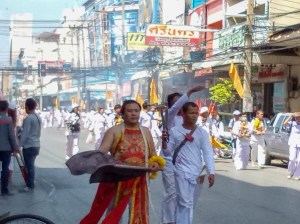
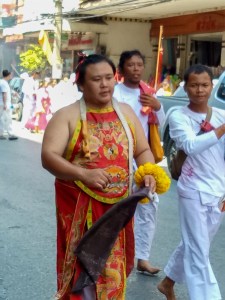
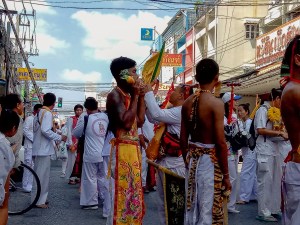
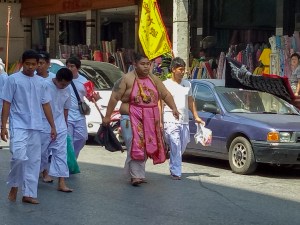
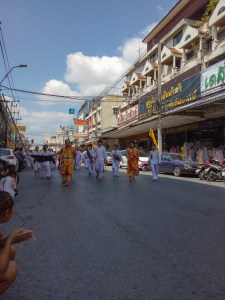
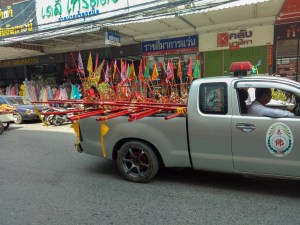
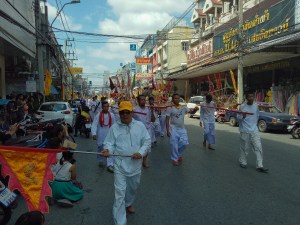
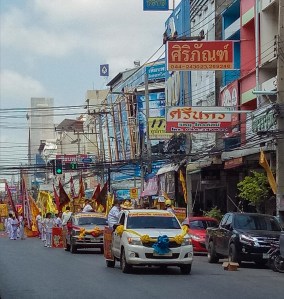
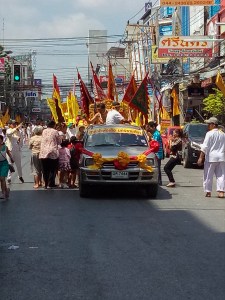
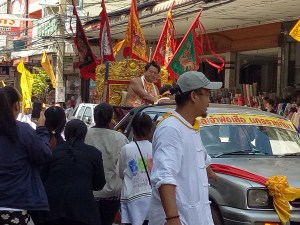
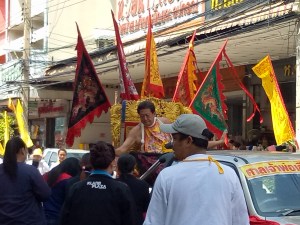
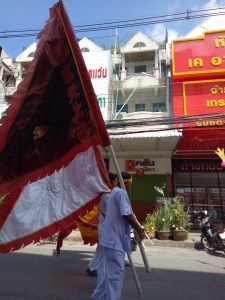
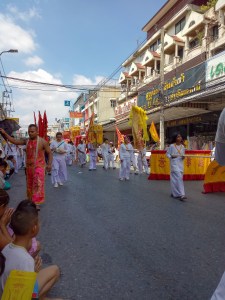
The Vegetarian Festival (‘Thetsaken Kin Che), also known as the Nine Emperor Gods Festival, is celebrated throughout Thailand in the month of October.
Thai/Chinese descendants, practice abstinence from eating meat and stimulants believing that it will bring about good health and peace of mind to the community. The event has its history in Taoist tradition, but it is clearly practised by Buddhists.
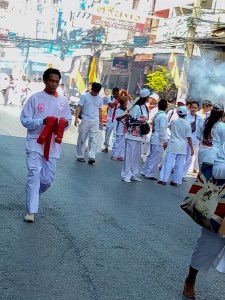
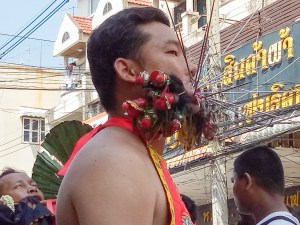
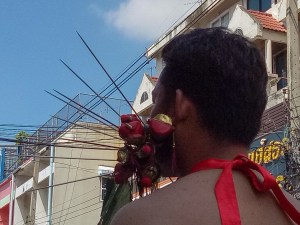
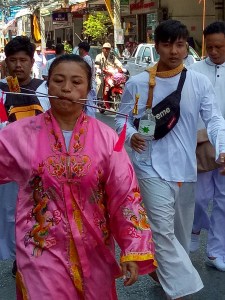
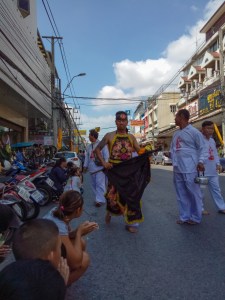
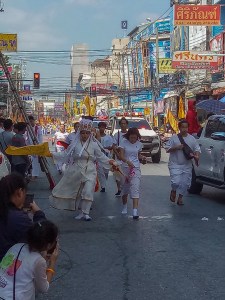
The images I post here are from this year’s parade (2018) as it wound its way through the centre of the old city, Korat.
On route businesses and people are blessed (and strangely) ritual mutilation is performed. Several men and women impale their cheeks with sharp metal and bamboo sticks decorated and undecorated. Cut their faces and light firecrackers close to their bodies. They also had evidence of cutting on their backs.
They seem to appear embodied with the spirits and blessed people (including myself) kneeling at the side of the road, these devotees used their Temple flags which were wafted vigorously over the heads of the kneeling worshippers. No doubt to cast out evil spirits and bless for good health. Some even painted a red mark just between the eyebrows of the worshippers.
At the bottom of this article you will also find a short video of the firecrackers and devotees.