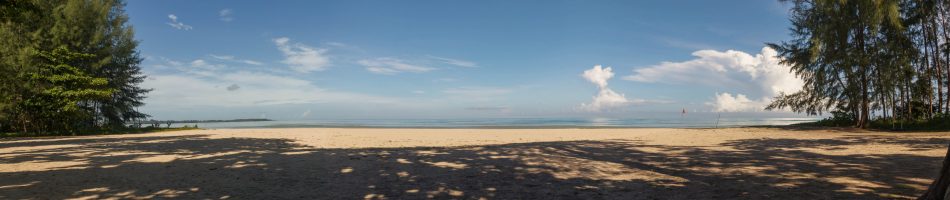
Thap Sakae in Prachuap Khiri Khan province is a place most travellers pass without stopping as they head south down the peninsula. I almost did the same. What I found instead was a quiet stretch of white sand, a calm rhythm to daily life, and a community that still feels deeply rooted in local traditions. Nothing felt staged or rushed. It was simple, peaceful, and genuine. If you’re travelling south and craving somewhere that lets you slow down, Thap Sakae is worth the stop.
Thailand
When I visited Phum Riang Beach in Chaiya, what stood out most was how quiet it felt. There was no rush, no noise, just open space and a sense of stillness. The tide was in, and the waves crashed gently against the soft sand, creating a steady, calming rhythm. Above it all were stunning skies and a beautiful sun, lighting the beach perfectly before the weather turned later that day. I found it to be a good place to sit quietly and clear my head. The beach felt untouched and peaceful, making it easy to slow down and simply be present.
Lamkum Beach
I visited Lamkum Beach on a quiet day, and the first thing I noticed was how empty it felt. The beach stretches out along the Gulf of Thailand with no crowds, no loud music, and very little development. The sand is simple and natural, and the shoreline feels open and unpolished. Small fishing boats were scattered along the coast, and the sound of the waves was steady and calm.
Lamkum Beach is far from the busier parts of Prachuap Khiri Khan, about 42 km from the city, but close to Thap Sakae, which is only 3.8 km away. That distance seems to keep it peaceful. I spent most of my time walking along the water, watching the light change over the sea. It’s not a beach for activities or nightlife, but for quiet moments and slow time, it’s exactly right.
I arrived in Ban Krut without a plan — and that was the point. The beach felt wide and empty. The sand was soft, the water calm.
I walked for a long time, passing only a few fishermen and one or two couples. No vendors. No noise. Just waves and wind moving through the trees.
That evening, I ate grilled fish at a small local place by the road — plastic chairs, a cold drink, perfect food. I went to sleep early with the sound of the ocean outside my window.
The next morning, a few locals walked the beach. Fishing boats moved quietly in the distance. It felt private, like the beach belonged to only a handful of people.
Ban Krut didn’t try to impress me. It didn’t entertain me. It simply gave me space — and that’s exactly why I’ll remember it.
I visited Ban Krut Railway Station on a quiet lunchtime. The station is small and unhurried, with a single platform and only a few tracks. There’s nothing fancy about it, but that’s part of its charm.
The station sits close to the village, so there’s no rush or noise. Just a few locals waiting, and the sound of a train pulling away. It felt less like arriving at a transport hub and more like arriving in a beach town. From the station, Ban Krut Beach is only a short ride away.
Palm trees line the road, and everything moves at an easy pace. Compared to larger stations in Thailand, this one feels personal and relaxed, like it belongs to the community rather than serving crowds of tourists. Ban Krut Railway Station isn’t a place you come to see. It’s a place you pass through quietly on the way to the sea. And that’s what makes it memorable.
The wooden houses of Ban Krut sit quietly along small roads and sandy paths, weathered by sun and sea air. Most are raised on stilts, practical and unfussy, built to let the breeze pass through and the rain run underneath. The wood is faded and uneven in places, showing years of use rather than neglect. Some houses have wide verandas with plastic chairs, fishing nets hung to dry, or motorbikes parked beneath the floor. Life feels visible here, not staged. There’s no attempt to modernize them for show. These houses exist because they work. They suit the heat, the pace, and the people who live in them.
Walking past, you get the sense that nothing is rushed and nothing needs fixing unless it truly breaks. Like the railway station, Ban Krut’s wooden houses aren’t attractions. They’re just part of daily life. And that quiet honesty is what makes them memorable.
San Chao Phra Shiva Shankar (ศาลเจ้าพระศิวะศังกร) is a small Hindu shrine dedicated to Lord Shiva in Thap Sakae District, Prachuap Khiri Khan, Thailand. It sits near the coast, not far from Thap Sakae Beach, just off Highway 1029.
We weren’t planning to stop there at all. We simply came across the shrine while driving toward the beach and decided to pull over. The shrine is in the Ang Thong sub-district, an area known for its quiet beaches and laid-back local life.
With the sea nearby and hardly anyone around, the place felt calm and reflective, a peaceful pause in the middle of our road trip. Despite its small size, it left a strong impression and turned into one of those unexpected moments that stay with you.
Ban Krut Fishing Village -Prachuap Khiri Khan province-Thailand
Ban Krut is an old fishing village in Prachuap Khiri Khan province, about 360 kilometers south of Bangkok. It has attracted some local tourists over the years, but it never feels like a resort town. The fishing village is still there, still working. Boats leave early, the day’s catch is sorted on the shore, and life moves at a pace set by the sea, just as it always has.
Skip navigation

Hat Yong Lin Beach- Trang-Thailand
Hat Yong Ling feels like a secret you’re glad you found. It’s not flashy or packed with beach bars—it’s quiet, curved like a crescent moon, with soft sand and that line of casuarina trees whispering in the wind. You walk out, and the sea is warm, calm, and inviting.
You don’t need much here—just a towel, maybe a book, and time to let go. On weekends, you’ll see Thai families setting up picnics under the trees, kids chasing crabs in the tidal pools, laughter echoing over the sand. It still feels local, untouched. And when the sun gets too strong, the pine forest behind the beach pulls you in.
The shade is cool, and if you follow the trails, it’s just you, the trees, and the soft crunch of needles under your feet. Hat Yong Ling isn’t just a beach—it’s a pause button. A place that reminds you how good simplicity can feel.
From my visit to Suan Phai Kwanjai Market (Bamboo Market) in Khuan Khuan district of Phatthalung during our road trip in December 2024.
we saw this Muang Lung Cut Nut Shop (Ko Daeng) is a well-known snack shop from Phatthalung Province, famous for its traditional bean candy. The owner has been selling at OTOP product fairs nationwide for over 30 years, preserving the ancient method of making cut bean cakes. These snacks are made fresh and served hot, earning a loyal following among customers.
Pakarang Beach, tucked along Khao Lak’s coastline in Phang Nga, Thailand, is a serene spot that hasn’t yet been overrun by crowds. Its wide stretch of soft sand and shallow, clear water make it perfect for a quiet day by the sea. The beach is lined with casuarina and palm trees, giving plenty of shade and a laid-back vibe.
Unlike more developed beaches, Pakarang feels almost untouched. It’s great for long walks, collecting shells, or just sitting to watch the sunset. The nearby coral reef (pakarang means “coral” in Thai) adds a splash of natural beauty, especially at low tide when coral fragments dot the shore.
If you’re looking for a peaceful, beautiful place where you can hear the ocean and escape the rush, Pakarang Beach is one of Khao Lak’s hidden gems.
Hat Yong Ling feels like a secret you’re glad you found. It’s not flashy or packed with beach bars—it’s quiet, curved like a crescent moon, with soft sand and that line of casuarina trees whispering in the wind. You walk out, and the sea is warm, calm, and inviting. You don’t need much here—just a towel, maybe a book, and time to let go.
On weekends, you’ll see Thai families setting up picnics under the trees, kids chasing crabs in the tidal pools, laughter echoing over the sand. It still feels local, untouched. And when the sun gets too strong, the pine forest behind the beach pulls you in. The shade is cool, and if you follow the trails, it’s just you, the trees, and the soft crunch of needles under your feet.
Hat Yong Ling isn’t just a beach—it’s a pause button. A place that reminds you how good simplicity can
feel.
Finding Tranquility at Koh Bae Na Beach
Tucked away in Thailand’s Trang region, Koh Bae Na Beach feels like one of those places you stumble across by accident and never forget. Located in the Andaman Sea (part of the Indian Ocean), it ranks 21st out of 53 beaches in Trang, but honestly, numbers don’t do it justice. It’s about 34 km from Trang city, with the nearest settlement, Hat Chang Lan, just 2.8 km away.
What makes Koh Bae Na special is how untouched it is. No resorts. No beach bars. Just nature at its best. The setting is a beautiful mix of rugged cliffs, mountain slopes, thick greenery, and that perfect turquoise water. The sandy beach runs for about 800 meters, with a gentle slope into the sea—no sharp rocks, no need for aqua shoes. Just soft sand under your feet.
When I visited back in 2023, the nature walk circling the small islet wasn’t finished yet (word is, it’s complete now). We had the whole beach to ourselves for hours, aside from a small family of beach dogs—mum, dad, and two playful pups—all very relaxed and friendly.
What stood out most for me was the calm. It was one of the most peaceful places I’ve ever been. With the tide out, I could stroll across the pontoon path without feeling like I was about to fall in every few steps. The views were stunning, with crystal-clear water on one side and thick jungle on the other.
There’s also a wooden staircase leading up to a viewpoint on one side of the islet. I didn’t climb to the very top, but I could already tell the view was going to be spectacular.
If you love nature, solitude, and quiet adventures, this place will hit the spot. Whether you’re into kayaking, paddleboarding, or just sitting and soaking up the scenery, Koh Bae Na is a gem worth exploring.
Enjoy the journey—I know I did.


 Journeys From A Small Room